
Why Online Home Valuations Can Mislead and How to Get a More Accurate Estimate

An online estimate can be a useful starting point. It can also be off by tens of thousands of dollars.
That matters if the number shapes a listing price, refinance plan, renovation budget, or offer strategy. Home value is not one fixed number. It is a range, and the best estimate comes from current data plus human judgment.
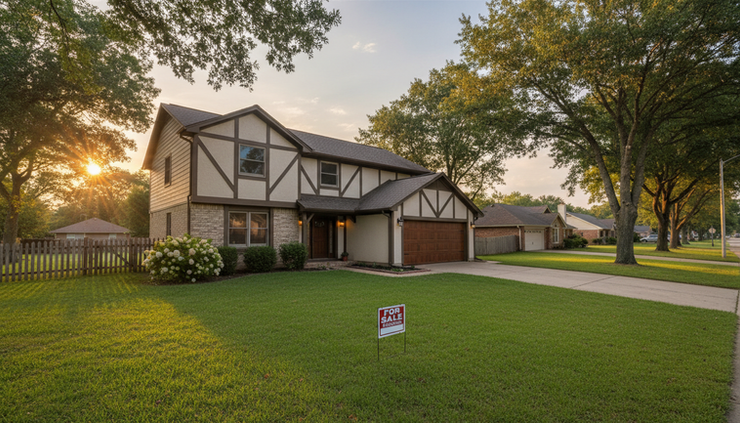
Automated estimates rely on incomplete data
Most online valuation tools use public records, past sales, tax data, square footage, lot size, and recent nearby sales. That data helps. But it often misses what buyers actually notice.
A system may know a home has 2,100 square feet and three bedrooms. It may not know the roof is new, the basement floods, the kitchen was remodeled, or the home backs up to a noisy road.
Common data problems include:
Wrong square footage
Public records may exclude finished basements, converted garages, additions, or old corrections.
Missing updates
A renovated kitchen, new HVAC system, or updated bathroom may not appear in public data.
Outdated sales
A sale from six months ago may not reflect current buyer demand, interest rates, or local inventory.
Bad comparable homes
The tool may compare homes that are close on a map but very different in real life.
Online home valuations can mislead because they treat a home like a data point. Buyers do not. They compare condition, layout, street, light, noise, storage, and feel.
Location is more detailed than a ZIP code
Valuation tools often use a broad area to find comparable sales. That can create major errors.
Two homes in the same ZIP code can have very different values. One may sit near a preferred school boundary. Another may be on a busy cut-through street. One may face a park. Another may face a warehouse wall.
Small location details can change value:
School attendance zones
Flood zones and drainage issues
Street traffic and noise
Walkability to shops, parks, or transit
Views, privacy, and lot position
Homeowners association rules and fees
Nearby construction or zoning changes
A model may see two homes as “nearby.” A buyer may see one as peaceful and the other as compromised.

Condition and upgrades can break the estimate
Automated tools struggle with condition. This is one of the biggest gaps.
A home with original 1980s finishes may have the same public record profile as a home with new flooring, updated plumbing, and a redesigned kitchen. The algorithm may value them close together. Buyers will not.
Here are common situations where online estimates fall short.
Situation | Why the estimate may be wrong |
A home was fully renovated after the last sale | Public records may not show the quality or scope of the work |
A property needs major repairs | The estimate may assume average condition |
The floor plan is awkward | Algorithms may miss layout problems that affect buyer interest |
The home has an unpermitted addition | Square footage may not count the way the owner expects |
The yard is unusually large or small | Lot quality, slope, and usability may not be captured well |
Renovations also do not return value dollar for dollar. A $60,000 kitchen project does not automatically add $60,000 to market value. The impact depends on the neighborhood, quality, buyer expectations, and competing listings.
The market can move faster than the model
Real estate is local and time sensitive. A valuation tool may lag behind the market.
If inventory is low and multiple buyers want the same type of home, sale prices can rise fast. If mortgage rates jump or more homes hit the market, buyers may pull back. Online tools can miss these short-term shifts.
Seasonality also plays a role. In many U.S. markets, spring brings more listings and more buyers. Late fall and winter can be slower, though this varies by area.
A fair estimate should ask:
What similar homes went under contract recently?
How many days did they stay on the market?
Did they sell above or below list price?
How many competing homes are available now?
Are buyers asking for repairs or closing cost help?
Closed sales matter. Pending sales and active listings matter too. They show where the market is headed, not only where it has been.

How to get a more accurate home value
A better estimate uses more than one source. Start with the online number, then test it against real market evidence.
Use these steps.
Check your home facts
Confirm square footage, bedroom count, bathroom count, lot size, year built, and property type. Bad inputs lead to bad estimates.
Review recent comparable sales
Look for homes that match location, size, age, condition, and style. The best comps are close by and recently sold.
Compare condition honestly
Be direct about repairs, finishes, layout, curb appeal, and major systems. Buyers price these details into their offers.
Look at active competition
If similar homes are sitting unsold, that affects value. If they sell in days, demand may support a stronger price.
Ask for a local market analysis
A real estate professional can weigh the data and adjust for features an algorithm misses.
Consider an appraisal when needed
For refinancing, estate planning, divorce, tax questions, or major financial decisions, a licensed appraiser can provide a formal opinion of value.
No estimate is perfect. The goal is a realistic range backed by evidence.
If you want a clearer read on your property, request a home value conversation based on your home’s condition, location, and current market activity.

FAQ
Are online home estimates ever accurate?
Yes, sometimes. They work best for homes in neighborhoods with many similar recent sales. They are less reliable for unique homes, rural properties, renovated homes, or areas with few recent sales.
Why do different websites show different values?
Each site uses its own data sources and formula. One may weigh tax records more. Another may weigh recent sales more. Small data differences can create large value gaps.
Does a high online estimate mean I can sell for that price?
No. Buyers and appraisers look at real comparable sales, condition, and current competition. A high estimate may be a good sign, but it is not a guaranteed sale price.
Should I use an appraisal or a real estate market analysis?
Use a market analysis when planning a sale or tracking market value. Use an appraisal when a lender, court, tax matter, or legal process requires a formal valuation.
The best estimate combines data and judgment
Online tools are convenient. They are not a full valuation.
A stronger estimate looks at facts, recent sales, property condition, location details, and buyer behavior. Use online values as a starting point, not the final answer. The more complete the picture, the better the pricing decision.


Comments